

Amen to that.
Conceptually, the rise of AI should have been a technological advancement that aided mankind with monotonous, everyday tasks, made tangible impacts on the medical field and ultimately stayed the hell out of the way of creatives and the art world as a whole. As time passes, it’s becoming abundantly clear that it’s done the opposite of that — not only stealing real artists creative works and repurposing it as its own but also deceiving many along the way.
While nearly everyone in the arts (or anyone with respect for creatives in general) are against its use, it’s an issue that we’re going to have to deal with (and actively protest) for the foreseeable future until restrictions can be made and legislature can be signed to limit it.
Unfortunately, it seems as if that’s a long ways away at the time being. And despite calls from nearly every artist in existence, highlighted by a 200+ person letter signed by the Artist Rights Alliance which includes the likes of Billie Eilish, Jon Bon Jovi, Stevie Wonder, Rosanne Cash, Kacey Musgraves, Chappell Roan and many more all the way back in April of 2024, we’ve seen bad actors profiting off of AI-generated music for the better part of a year at this point.
This was highlighted most notably back in October when a completely AI-generated “artist” going by the name of Breaking Rust, captured the #1 spot on a Billboard country chart. Given that this was the first primary instance of a completely AI-generated song going #1 on any major Billboard chart, it caused quite the validated stir in the music community. Our very own Aaron Ryan, who broke the story here at Whiskey Riff, ended up appearing on NPR’s podcast to explain the whole ordeal.
Here in the country music world, we’ve seen plenty of artists speak out against its use over the past year or so. Notably, Wade Forster and Shooter Jennings let their thoughts on its use be known lately, with Forster condemning it and Jennings offering up advice to artists and producers to make their tracks sound more human in the age of AI.
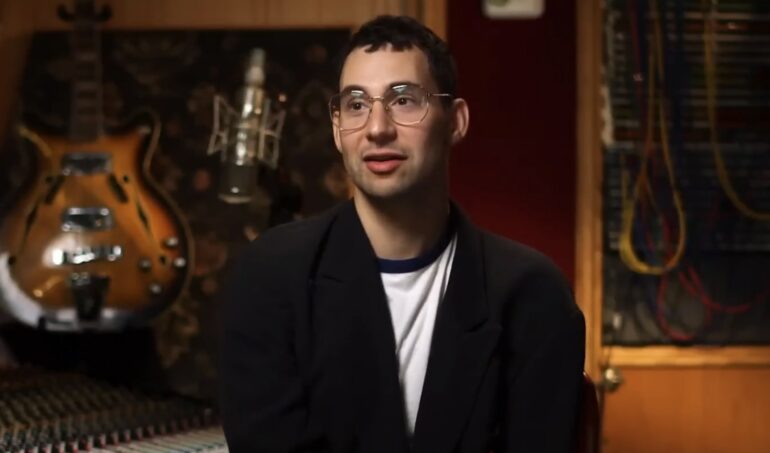
Outside of the country world yesterday, we saw one of the most biting, righteously-angry critiques of artificial intelligence in music from the 14x Grammy winner, Jack Antonoff.
In case you’re not familiar with Antonoff, he’s been a key part of Taylor Swift’s dominance the past decade, producing the likes of 1989, Reputation, Midnights and Life of a Showgirl and co-writing some of her biggest hits lately such as “Cruel Summer,” “Anti-Hero,” “august” and “Look What You Made Me Do.”
His success doesn’t stop at Swift, however. Antonoff has also produced and written on hit records from the likes of Lana Del Ray, Sabrina Carpenter, Kendrick Lamar, The 1975, Olivia Rodrigo and just about any other major pop star over the course of the past decade. In terms of country adjacent, he’s worked with the Chicks and Maren Morris. Simply put, he’s one of the hottest and most successful songwriter/producer working today.
In a journal entry posted on his Instagram, the “Please Please Please” writer would condemn the use of AI in the creation of music. Nailing it on the head, he points out that removing the human emotion from the process misses the entire point of the creating art as a whole.
“What we do has become and ancient ritual. You don’t have to write music, you don’t have to record it and you don’t have to bring out the band and play it. And yet for us, the idea of optimizing what we do is a complete miss of the entire point of what compels us in the first place. We (myself, the band and everyone I know, frankly) have never been looking for this work to become quicker or easier. We were never frustrated by the randomness and magic it takes. We do it for that exact reason – and without the process itself ::: nothingness.”
He’d then take aim at those who are actively promoting AI in art, telling them to proverbially drive the trend “right off the cliff” and asking them to leave the industry. Additionally, he’d call the creation of music a “holy process,” noting that the act comes to us as humans from God, before slamming anyone who uses artificial intelligence to create “art” and calling them “Godless whores.”
“So to everyone who is gassed up about the new ways you can fake making art, by all means drive right off that cliff. We’re genuinely happy to see you go. Generations coming will be engaging in the ancient ritual of writing, recording and performing as it comes to us from God. So as we embark on this strange detour where the bad actors will willingly reveal themselves through slop, and the struggling great will be further spread thin to make an honest living doing what they were put on Earth to do, we (myself, the band and frankly everyone I know) remain more dedicated than ever to reveal what comes from within. Writing music, recording and performing it — that’s it. Nothing more embarrassing than considering there is a way to optimize that holy process. Godless whores.”
Honestly, I couldn’t have said it any better myself. Going beyond the fact that AI “art,” in and of itself is nothing short of theft — repurposing and stealing other artists’ creative works — it strips everything that’s beautiful about the process away. Whether the piece at hand is a childhood drawing or one of the most highly-regarded ballads of all time such as “I Will Always Love You,” they share two things in common: a deep human emotion and purposeful, introspective thought.
As AI becomes more and more dangerous by the day, both from an artistic and privacy perspective, it’s great to hear some of the leaders in the music industry such as Antonoff so eloquently state why the issue is far worse than the general public might think it is.