

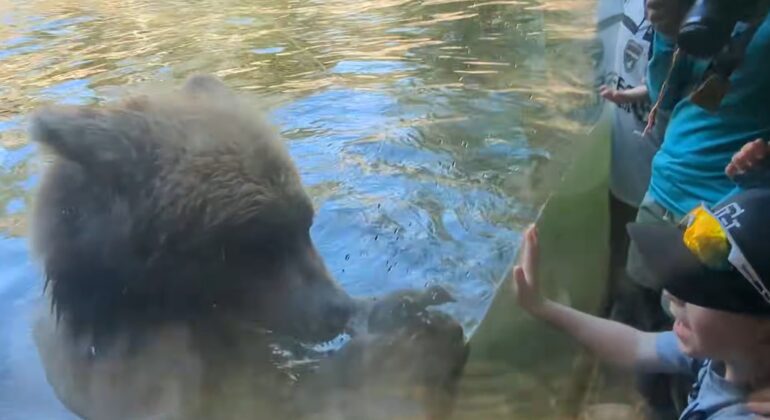
These kids got their money’s worth at the Seattle Zoo… or, well… maybe an early dose of violent childhood trauma.
The food chain is a natural part of life in the wild. Bigger animals eat smaller animals; carnivores must get their meat supply from somewhere; and at the end of the day, it’s eat or be eaten in a lot of ecosystems. Not all of them, and not for every single species, but by and large, ecosystems maintain balance with different levels of predators, prey, and natural forage that keep the hamster wheel spinning.
Heck, even we humans contribute to the balance of the food chain by hunting and fishing… each state studies the animal populations across their landscape and then decides how much humans can participate in the food chain to help maintain a good balance. Not enough deer hunting means too many deer… which then means more car accidents, more starvation, and overeating of the local vegetation. Where I live in Wisconsin, they’re actively encouraging more deer hunting and will even hook you up with some land to hunt if you do not know where to begin.
Of course, that level of participation in the food chain might look different than a lion mauling a gazelle in the wild, but the principle is still the same.
Grizzly Bear Diet
Most of us might picture grizzly bears as bloodthirsty apex predators constantly chasing down elk or tearing apart whatever gets in their way, but the reality is actually a lot less barbaric. Grizzlies are the ultimate opportunists, and their diet looks a lot more like moseying on up to a buffet to see whatever is available and less like tearing apart bone and flesh.
Believe it or not, up to 80% or 90% of a grizzly bear’s diet is actually vegetation… they are basically 500-pound, incredibly dangerous cows for a good chunk of the year. In the spring, you’ll often find them just sitting in meadows eating pounds of clover, dandelions, and fresh grasses. They use those massive shoulder humps and long claws to dig up roots and bulbs, even bugs and grubs. Come late summer, they will gorge themselves on huckleberries and blackberries, eating thousands of them a day.
For coastal grizzlies (which are often just called brown bears) in places like Alaska, salmon is the name of the game. Catching fish during the salmon run is the fastest way to pack on the fat required to survive hibernation. They tend to be much fatter and happier than the inland grizzlies, which is why you see wildlife photographers coming very, very close to them on numerous occasions.
And finally, let’s talk about carrion. Grizzlies absolutely love a free meal. If a winter-killed bison thaws out in the spring, or if a wolf pack takes down an elk, a grizzly will gladly stroll in, try to run the wolves off, and claim the rotting carcass for itself.
Hunting Meat
Of course, they eat meat, they LOVE meat, but they usually prefer the path of least resistance rather than a full-blown, energy-draining hunt. It takes a lot of energy to chase down an elk calf for miles and tear it to pieces. So when they see one, it’s game on… but they really don’t spend most of their days every year sniffing out other mammals to hunt. Especially in the spring, they will try to track down newborn elk and moose calves hiding in the brush. They will also occasionally ambush adult prey, but chasing down a healthy, full-grown elk takes even more energy, so it’s not their daily go-to.
Now that we have the grizzly bear diet under wraps… let’s get back to our kids at the Seattle Zoo, who got a crash course in grizzly bear eating habits.
Kids at Seattle Zoo
These kiddos had their faces pressed up to the viewing tank of the grizzly bear exhibit and got a real-life look at how the food chain works—and boy, were they in shock.
A mother posted a video showing a cute family of ducks landing in the water feature of the bears’ enclosure. The children around the tank are filled with amazement as one of the grizzly bears shows interest in the family. But not a “Hey, look at those cute duckies” interest; it was an “Oh, that looks like a tasty snack” interest.
The bear circles the edge of the water a few times before making the plunge toward the mother duck and her ducklings. Poor things didn’t stand a chance…
The bear easily snags one, plopping it into its mouth for a snack. The ducklings swim away, hoping to escape, but they keep getting plucked one by one by the bear. You hear the kids screaming in shock, and one little girl yells:
“It’s just a baby! They are dying, Mama!”
Yep, that’s life, kid… deal with it.
At one point, I felt like the bear was saying, “Hey, kids, watch this,” as she kept catching the babies in front of the children. The woman filming seemed to have an outlook that might not be similarly shared with the other parents, noting that her children were not traumatized because they watched David Attenborough documentaries… I guess it’s not their first rodeo. I recently watched a great blue heron scarf down a northern pike with my 4-year-old and my 2-year-old, and they were in absolute awe… I’m all for kids learning about the circle of life early. They also know where the chicken and the beef on their dinner plate come from… sorry, not sorry.
It’s hard out there in the wild… or well… the zoo.
You already know the comments section on this was a gold mine.
“Bear was like, sweet Uber Eats is here with my nuggets.”
“That bear just changed the trajectory of those children’s lives.”
“I’m picking the bear.”
“Baby ducks are like popcorn shrimp for bears.”
“That poor mama duck.”
“The way it kept getting worse.”
“And then they all had burgers or tuna sammies for lunch.”
“Nature’s peeps.”
“Alexa: Play ‘Circle Of Life.’”
In the zoo’s and bear’s defense, these are educational exhibits, and this bear was putting on quite the demonstration for this group of young kids. They were going to learn eventually…