

In many ways, country music is in one of its most fascinating eras to date at the moment.
On one hand, you can argue that the genre is in the best spot it’s been in decades. Whether it’s Ella Langley taking a traditional country song, “Choosin’ Texas,” to the top of the Billboard Hot 100 for a record-shattering 26 weeks and counting, Zach Top garnering national attention after his Grammy win or the rise of independent/alternative country through the success of spearheading artists such as Tyler Childers, Sturgill Simpson, Zach Bryan, Colter Wall, The Red Clay Strays, Turnpike Troubadours, Whiskey Myers, Flatland Cavalry, Sierra Ferrell and many more, there’s a lot to love right now.
On the other hand, however, mainstream country music still remains nothing short of a stain on the genre, especially from an authenticity standpoint. While, of course, you have some bright spots, thanks to artists such as Langley, Top, Cody Johnson, Luke Combs and Parker McCollum (to name a few), taking one look at the current state of the Top 40 on country radio is nothing short of depressing.
In a recent article from September, we took a look at the names populating the top spots, and it’s quite a doozy. To put it plainly, it’s the farthest cry from traditional, authentic music you can ask for, with names like Morgan Wallen, Shaboozey, Jelly Roll, Russell Dickerson, Chase Matthew and the highly-controversial Stella Lefty populating the chart.
Simply put, unless you’re looking at the aforementioned names populating the alternative country scene, you’re going to have a hard time finding a ton of authenticity in the genre today. Of course, there are multiple reasons for this. There’s the over-reliance on massive writers’ rooms that produce incredibly sanitized songs. There’s the insistence on infusing pop and trap elements into the production of songs, thanks to the rise of artists such as Wallen and Shaboozey. Then, arguably the worst of all, there are labels that will throw money at — and subsequently force-feed the general public — at artists who are generally disliked by a large portion of the genre and its audience.
While that’s just scratching the surface of some of the problems plaguing the genre today, at least from a mainstream perspective, there are still artists fighting the good fight and perfectly describing the issues at hand.
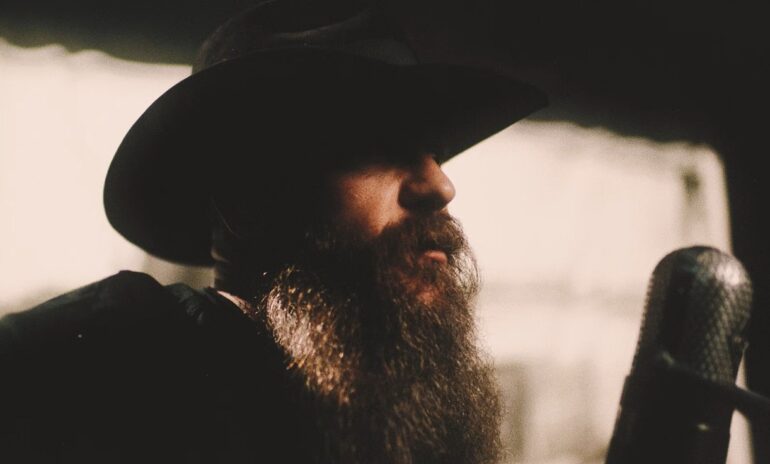
Cody Jinks, who has remained one of the unsung heroes of today’s alternative country movement, uploaded a video that perfectly addresses the issues mentioned above.
In a brief video that appears to have been taken during a conversation in a green room, the “Loud and Heavy” singer states that there aren’t any “a**-kickers” anymore in the genre, in reference to how he and many of his fellow outlaw artists from Texas and beyond used to cut their teeth in barrooms playing behind chicken wire.
Additionally, Jinks would ask why there aren’t any modern-day outlaws like the legendary George Jones and Johnny Paycheck, nailing the fact that major record labels nowadays aren’t going to sign artists who can be seen as risky:
“Where I come from, chicken wire ain’t a joke, man. We didn’t f*** around with that. You had to get behind it. That’s where I come from, and there ain’t no a**-kickers no more. Let me ask you this, ‘Where’s George Jones?’ or ‘Where’s our modern Paycheck — Johnny Paycheck?’
You know why? You’re not gonna have them. You’re not gonna have problem children signed by the record companies anymore. They can’t control them. Why? ‘Cause they’re artists”
Giving his most biting critique of modern country yet, Jinks would finish the brief yet poignant rant by touching on the fact that many artists, in the mainstream in particular, don’t write their own songs and instead rely on a revolving door of songwriters down in Nashville.
“We got a bunch of people singing songs they didn’t write about sh*t they didn’t do. You are sh*tting on my craft. That pisses me off.”
Like nearly everything Jinks has said over the years, he hits the nail on the head once again here. While, of course, you have some major artists in the alternative scene doing things their way, writing songs about their lived experiences and being true students of the genre, they’re few and far between.
And even fewer, outside of the likes of Bryan, Childers and Simpson, have taken their authenticity to a larger scale from a pure sales and commercial standpoint.
Before you go, fire up “Hippies and Cowboys.”