

A country artist has been ordered to pay $17.5 million to the family of a California teenager who went missing back in 2022 before being found deceased weeks later.
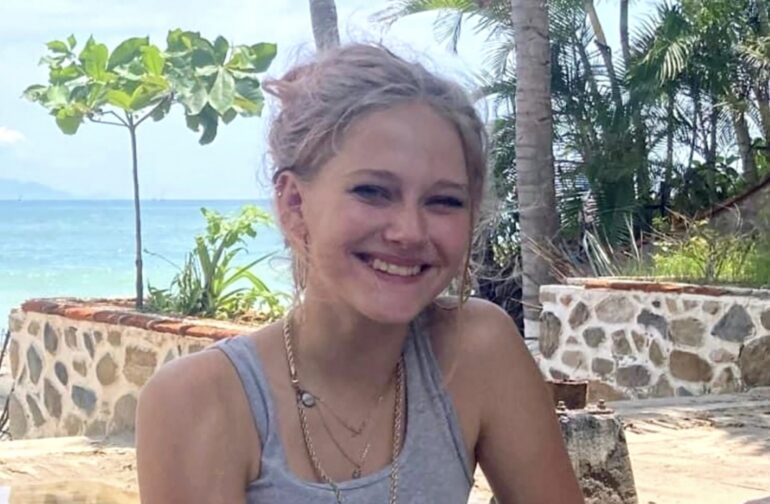
It all started back in 2022 when 16-year-old Kiely Rodni went missing after leaving a party near a campground in Truckee, California, near Lake Tahoe.
After a two-week search, Rodni’s vehicle was located inside a reservoir near where she went missing. The coroner ruled at the time that her cause of death was drowning and that the death was accidental, with the sheriff’s office releasing a statement confirming that no foul play was suspected:
“This ruling is based on the pathologist’s finding that her death was the result of drowning and that there was no other information to suggest she was the victim of foul play.”
Following her death, a lawsuit was filed against country artist Ryan Upchurch for videos he had posted on the case, including one during the time she was missing titled “ZERO proof of Kiely Rodni situation being REAL.” In the video, Upchurch says:
“Do you realize that you can be a millionaire on GoFundMe by catfishing people with internet deaths? You could do it fast as f–k. Look at the Kiely Rodni GoFundMe. It’s made $63,000 in the past seven days. That’s one GoFundMe for Kiely Rodni. If you have five GoFundMe’s for each individual person that you catfish, fake a death with, all you need is three people. Three people. Three viral stories. You’re a millionaire in two weeks.”
The lawsuit, filed by the teenager’s father David Rodni and grandfather Daniel Robertson, accused Upchurch of defamation, false light invasion of privacy, intentional infliction of emotional distress, and negligent infliction of emotional distress, while asking for unspecified damages including “damages to their reputation, financial losses, emotional distress, and punitive damages,” citing the artist’s “outrageous, intentional, reckless, and conscious-shocking tortious actions.”
Upchurch filed a motion to dismiss the lawsuit, arguing that his statements in the videos were his opinions and that his speech was protected by the First Amendment:
“All of Mr. Upchurch’s videos contain the same elements of drama, hyperbolic language, and heated debate that would certainly give the audience the impression Mr. Upchurch was not asserting objective fact. Mr. Upchurch is not presenting his statements with any indication of private and personal knowledge or authority on investigations.”
The court, however, denied Upchurch’s motion to dismiss, and the case ultimately went to trial this past week. And yesterday, a Nashville jury found for Rodni’s family on all counts, awarding David Rodni and Daniel Robertson a total of $17.5 million in damages.
Now, it’s likely that Upchurch will appeal the massive verdict, which presents First Amendment issues and requires a court to determine the line between free speech and defamation. It will also no doubt cause other “true crime” YouTubers to pause before releasing their own commentary, given the size of the verdict and the implications on free speech.
The true crime space has become a popular one on social media, with plenty of amateur sleuths chiming in on big cases and giving their opinions and theories along with the facts. Just this past month, a TikTok psychic was ordered to pay millions of dollars to a University of Idaho professor who she accused of killing four students back in 2022.
As the number of true crime creators explodes, cases like this are no doubt going to continue to pop up to test the limits of what creators are allowed to say, how much they can speculate, and where the speculation crosses into defamation.
I guess we’ll have to wait and see what happens on appeal to find out for sure where that line is.
If you’re not familiar with Upchurch, the outspoken country rapper is never shy about sharing his views and speaking his mind. Back in 2021, he made headlines when he called out Luke Combs for an apology that Luke issued over his prior use of the confederate flag.
Combs had collaborated with Upchurch earlier in his career, including in Upchurch’s 2015 video for “Can I Get An Outlaw.” The video included confederate flag imagery, and during CRS in 2021 Luke addressed the issue and delivered an apology:
“There is no excuse for those images. I’m not trying to say, ‘This is why they were there and it’s OK that they were there.’ It’s not OK. As a younger man that was an image I associated to mean something else. As I’ve grown in my time as an artist, and as the world has changed drastically in the last five to seven years, I am now aware how painful that image can be. I would never want to be associated with something that brings so much hurt to someone else.”
Upchurch took issue with the apology, saying that artists need to stop being “f—ing sissies” and apologizing for things they didn’t do:
“I’m not trying to toot my own horn or be that egotistical a–hole, but am I the only country singer out here right now that’s getting Billboard charting spots that just says what I want to, that doesn’t apologize for everything and try to be something I’m not, and have a bunch of team members type up this s–t and be like, ‘Oh, you have to say this please because we got to make sure they know you’re not racist.’”
He also accused Luke of bowing to pressure from his label:
“Y’all really think he come out and said this by himself? You don’t think his record label daddy told him to do this? ‘You have to, Morgan Wallen just did that thing so you have to.’ You think he waited 6 years of not saying nothing, not preaching nothing about unity, but now he does and you don’t think somebody told him to?”