

Doesn’t matter how many times you fall, it’s all about how many times you get back up.
Country music and alcohol have a long history together. Whether it’s beer, whiskey, tequila or moonshine, alcohol has long served as the creative muse – or despised villain – in some of country’s greatest songs. But unfortunately, for many artists alcohol often goes from being a good time to a hurdle that can be hard to overcome.
Too many artists have battled their own addictions, no doubt driven in large part by an industry that both celebrates drinking and celebrates by drinking. Whether it’s drinking on the bus in between shows, backstage before taking the stage, at industry parties or in songwriting rooms, it can no doubt seem like alcohol is omnipresent, baked into the culture of country music and woven into the fabric of the industry itself.
But more and more, artists are making the decision to ditch the bottle entirely.
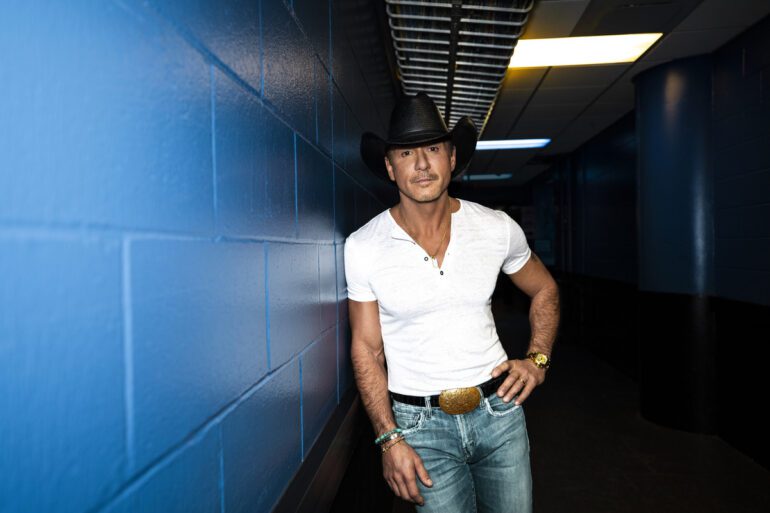
Tim McGraw is one artist who has been open about his journey with sobriety. As he recalled in the past, he knew he had a problem when he found himself reaching for the bottle first thing in the morning:
“I remember a moment when I was getting out of bed and going to the liquor cabinet and taking a big shot at 8:00 in the morning and thinking, ‘I have to wake the kids up.’
I went straight to my wife and said, ‘This is where I’m at.’ I was scared.
She just grabbed me and hugged me and changed my life.”
McGraw made the decision to get sober in 2008, and has credited his wife, Faith Hill, with encouraging him along the way:
“I wouldn’t just have a drink. If I was going to drink, I’d have some drinks. People were worried about me. It was to the point where I felt it was negatively affecting my relationships and getting in the way of things I wanted to accomplish in life…
Faith saved my life in a lot of ways – from myself more than anything. I can go down a dark road sometimes, when you’re not feeling good about yourself, and she pulls me out.”
But in a new interview, the “Live Like You Were Dying” singer opened up on his sobriety – and admitted that it hasn’t been easy.
During a vulnerable conversation with Alison Bonaguro for Cowboys & Indians, McGraw revealed that he’s had setbacks in his sobriety journey:
“It hasn’t been linear for me. I’ve had setbacks.”
And he admits that it’s likely to be a constant struggle, one that he relies on his strong support system to overcome:
“I’ll probably always be teetering on that edge. But luckily, I’ve got a strong wife and strong daughters. And a good group of people around me who are there to pick me up.”
Of course having setbacks is nothing to be ashamed of: Too often people take a setback as failure and give up trying entirely. It takes more strength to get back on the wagon after falling off than it does to simply admit defeat, but at the end of the day credit to Tim for persevering through the setbacks and relying on his family to get through the tough times.
There’s no doubt that his journey is a familiar one for many artists. But hopefully anyone who finds that their sobriety isn’t linear either can look at Tim McGraw and realize that it’s ok to take a step back – as long as you keep moving forward.
Justin Moore On His Decision To Get Sober
Earlier this year, Justin Moore announced that he was taking some time off from touring to focus on his health. And after he returned to the stage, he opened up with his fans and revealed that he had spent 30 days in rehab after his alcohol use had gotten out of control.
During an appearance on TL’s Road House with Tracy Lawrence, Justin opened up on his struggle, revealing that being locked down during the COVID pandemic accelerated his drinking:
“I didn’t drink until I was 21. Don’t ask me how or why. Almost 20 years, [I] never had any issue whatsoever. And then COVID hit, we were doing our podcast at the time and literally nothing else. Man, ‘Idle hands are the Devil’s workshop’ is a real thing. A drink at 5:00 turned into 3:00 and noon. Then, before you know it, it’s all day, every day. [It was] not even really getting smashed, just constantly having a cocktail.”
As he explained, he began noticing how much time and energy he was putting into drinking over the past two years, and finally decided it was time to get help:
“The last year, in particular, maybe two years, I just noticed I was putting so much energy into drinking and all that kind of stuff that it was taking away from not only my professionalism, but my family, most importantly, church, that kind of stuff.
I came home one Sunday as we do… I walked straight upstairs [and] told my wife, ‘I gotta go get help.’ I just gotta do it. I have to do it. It wasn’t fun, but I just looked at it like a business trip.”
And he credits his friend and tourmate Riley Green with supporting him as he took time to focus on himself:
“We were on the road with him and I talked to him and said, ‘Man, I need to do this.’ He didn’t bat an eye, he just said, ‘Dude, go help yourself and your family, and your spot’s ready to go when you come back.’
I say that to say this, his folks have been very kind and supportive to me and said some very nice things to me as well, and I just want them to know that I appreciate that. And I want them to know, I told them this personally, but their son is obviously as big as it gets in this business right now, but I’m proud to call him a friend, and he’s a damn good friend and a damn good man.
All you guys that are fans of him and all you guys and gals that have kiddos that are fans of him, you should be damn proud that you do.”
Hopefully everybody in the industry is just as supportive as Riley.