

There’s something about Alaska that gets into a hunter’s blood long before he ever sets foot there.
Maybe it’s the thought of standing in a remote river valley listening for a bull to grunt back at you. Maybe it’s the possibility of seeing a 60-inch bull step out of the willows. Or maybe it’s simply knowing that somewhere out there is a place where the wilderness is still wild, the animals are enormous, and Mother Nature couldn’t care less about your plans.
Whatever it is, Alaska has a way of becoming an obsession.
But for a lot of hunters, that dream comes to a screeching halt the moment they start looking at the price of a guided moose hunt… $35,000? $40,000? Maybe even $50,000? And just like that, the Alaska dream gets shoved back onto the bucket list.
But what if I told you that you don’t necessarily need an outfitter to hunt moose in Alaska?
What if you could plan the entire adventure yourself, save tens of thousands of dollars, and come home knowing that every part of that experience was something you made happen?
That’s exactly why I started Elkhorn Expeditions and created my FREE DIY Alaska Moose Hunting Masterclass. I wanted everyday hunters to understand that Alaska isn’t reserved for guys with unlimited bank accounts. And after planning and completing my own Alaska moose hunts, I can tell you something.
Doing it yourself changes the entire experience.
Give Outfitters Some Credit
Before somebody accuses me of trying to put every Alaska outfitter out of business, let’s get something straight… there are some outstanding guides and outfitters operating in Alaska.
These guys spend years learning their hunting areas, understanding moose behavior, building camps, maintaining equipment, and figuring out how to keep clients safe in some pretty unforgiving country. And that knowledge has a ton of value.
A reputable outfitter can take a tremendous amount of work off your plate. They may arrange transportation, provide camp accommodations, supply equipment, help locate animals, guide the hunt, and assist with meat care and recovery. For someone who doesn’t have the time, experience, or desire to handle all those logistics, a guided hunt can be a fantastic option.
And let’s not forget that Alaska can be downright dangerous.
Weather changes quickly. Rivers rise. Aircraft get grounded. Equipment breaks. And sometimes the nearest help is a very long way away. Having an experienced professional beside you can provide a level of confidence that’s difficult to put a price on.
There’s absolutely nothing wrong with hiring a guide.
But there’s also nothing wrong with asking yourself whether you actually need one… because for a lot of hunters, the answer might surprise them.
The Elephant in the Room: Money
Let’s get the obvious one out of the way… guided Alaska moose hunts are expensive.
Depending on the outfitter, location, accommodations, and services provided, a fully guided moose hunt can run $35,000–$50,000 or more (including travel and tip costs). Now, I’m not saying those outfitters are overcharging. Running a legitimate hunting operation in remote Alaska is incredibly expensive.
Aircraft, fuel, insurance, equipment, staff, food, permits, and the logistics involved in operating a remote camp aren’t cheap. But here’s the thing… when you book a guided hunt, you’re paying for somebody else’s time, experience, equipment, and labor in addition to your actual hunting expenses.
When you go DIY, you’re taking responsibility for much of that work yourself. And that’s where the savings come from.
On my most recent DIY Alaska moose hunt, I spent approximately $10,000 to get to Alaska, complete my hunt, and return home. After successfully harvesting my bull, my final expenses came to roughly $14,000, including the additional costs associated with getting my moose home. That’s still a substantial amount of money, I’m not going to pretend fourteen grand is pocket change.
But compared to a $40,000 guided hunt? That’s a difference of approximately $26,000. You could buy a pretty nice used truck with that money.
Or, knowing most hunters, you could spend it on another hunting trip and somehow still convince your wife you saved money. The point is, a DIY Alaska moose hunt can make an otherwise unattainable adventure financially possible.
And that’s only the beginning.
The Satisfaction of Doing It Yourself
Here’s where things get personal for me… I don’t believe the biggest benefit of a DIY hunt is the money. I believe it’s the satisfaction.
Think about everything that goes into planning an Alaska moose hunt.
You have to research hunting areas. Study regulations. Find a bush pilot or transporter. Figure out your equipment. Plan your food. Understand the terrain. Learn how to care for hundreds of pounds of meat. Develop contingency plans for weather and emergencies.
Then you have to get yourself into the Alaska wilderness and actually execute the plan.
Nobody is standing there telling you where to go every morning. Nobody is making every decision for you. And nobody is guaranteeing that any of your carefully laid plans are going to work. That’s Alaska.
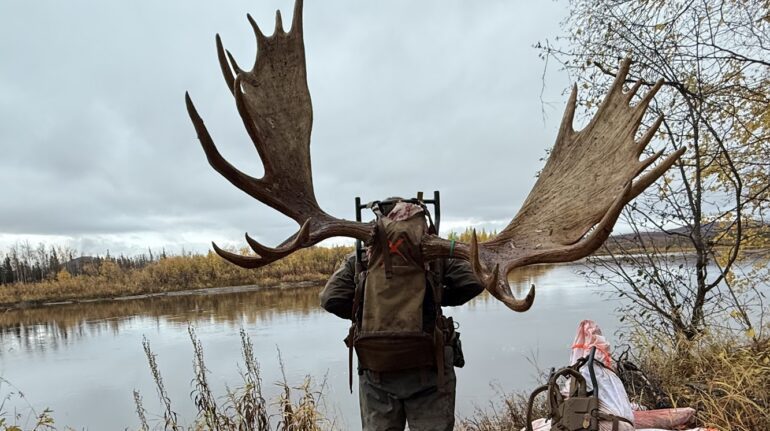
But when you finally hear a bull respond to your call, when you see those massive antlers coming through the willows, and when everything you’ve spent months planning finally comes together… there’s a level of satisfaction that is difficult to explain to someone who hasn’t experienced it.
You didn’t just show up for a hunt. You built the entire adventure. And whether you kill a moose or not, that accomplishment belongs to you.
Become a Better Outdoorsman
One of the most overlooked benefits of planning your own Alaska hunt is how much you learn along the way.
A guided hunt can certainly teach you plenty. A good guide can be an incredible source of knowledge. But when you’re responsible for the planning, you’re forced to develop skills you might otherwise never need.
You learn how to evaluate hunting areas using maps and satellite imagery. You learn how to communicate with bush pilots and understand aircraft limitations. You learn how to pack efficiently, manage weight restrictions, prepare for severe weather, and develop backup plans. You learn about moose habitat, river systems, meat care, and the realities of operating in remote wilderness.
And you learn something else… how to solve problems when things don’t go according to plan.
Because I promise you, something won’t. Alaska has an incredible ability to remind you that you’re not nearly as smart as you thought you were sitting at your kitchen table six months earlier. But those challenges make you a better outdoorsman.
And the knowledge you gain doesn’t disappear when the hunt is over. You carry it into every adventure that follows.
Hunting on Your Own Terms
Another thing I love about DIY hunting is the freedom.
When you’re on a guided hunt, you’re generally working within somebody else’s operation. They have established camps, schedules, hunting areas, procedures, and ways of doing things. And understandably so. They’re running a business.
But on a DIY hunt, you have considerably more control over the experience.
Want to spend the morning calling from a particular ridge? Go for it. Want to move camp because you’ve found better habitat somewhere else? If your logistics and conditions allow it, that’s your decision. Want to sit beside a river for an afternoon and just soak in the fact that you’re in the middle of Alaska? Nobody’s going to hand you an invoice for wasting their time.
You’re responsible for the decisions, the successes, and the mistakes.
And personally, I wouldn’t have it any other way.
One thing people don’t always understand about a DIY hunt is that the adventure begins months, sometimes years, before you ever board the airplane. It starts when you open a map and begin researching possible hunting areas.
It continues through conversations with pilots, researching equipment, studying regulations, and figuring out how you’re going to pull off something that initially seems almost impossible.
You start recognizing river names. You learn the difference between a float hunt and a drop camp. You spend entirely too much time staring at satellite imagery. And eventually, your browser history starts looking like you’re planning a military invasion of western Alaska.
But there’s something incredibly rewarding about that process.
Every reservation, every piece of equipment, every logistical decision brings the dream a little closer to reality. And when you finally step off that bush plane and watch it disappear over the horizon, there’s a moment when you realize… holy crap. I actually pulled this off.
Now comes the easy part… you just have to find a moose.
But DIY Isn’t for Everybody
Here’s where I want to be very clear… a DIY Alaska moose hunt is not something you should take lightly.
You’re operating in remote wilderness, often without cell service, immediate medical assistance, or easy access to transportation. Weather can turn dangerous. Rivers can become impassable. Equipment failures can create serious problems.
And harvesting a mature bull moose introduces an entirely new set of physical and logistical challenges.
You’re dealing with hundreds of pounds of meat that must be properly cared for and transported, often under difficult conditions. If you’re not willing to research, prepare, and accept responsibility for those challenges, a guided hunt might be the better choice. There’s no shame in that.
And if you have physical limitations, limited time, or simply want the benefit of an experienced professional helping you navigate Alaska, hiring a reputable outfitter may be money well spent. But don’t confuse not having experience with not being capable of learning.
Every experienced Alaska hunter had a first trip.
Nobody was born knowing how to organize a bush flight or pack a moose out of a swamp. The key is preparation, realistic expectations, and understanding your own limitations. And sometimes the smartest decision you can make is admitting that a particular hunting area or adventure is beyond your current abilities.
That’s not weakness, that’s good judgment.
You Don’t Have To Do It Alone
This is probably the biggest misconception I encounter.
When guys hear the words do it yourself, they assume it means they have to figure out every single detail without any help. That’s simply not true.
You can hire a bush pilot. You can use a transporter. You can rent equipment. You can talk with experienced hunters, wildlife biologists, and people who know the country. You can take advantage of resources that help you understand the planning process.
DIY means you’re organizing and taking responsibility for your own hunt. It doesn’t mean refusing to use the expertise available to you. That’s actually the entire reason I created my FREE DIY Alaska Moose Hunting Masterclass through Elkhorn Expeditions.
I wanted to take the information I’ve learned through my own experiences and organize it into something that helps other hunters build their own Alaska adventure.
The course walks through selecting a hunting area, understanding float hunts versus drop camps, arranging transportation, budgeting, equipment, meat care, regulations, and the logistics that can make or break a trip.
And it’s completely free… no catch.
Because I believe more hunters should have the opportunity to experience Alaska without feeling like they need to mortgage their house to do it.
Plan Your Own DIY Alaska Moose Hunt
If you’re serious about making your Alaska dream a reality, I created the Elkhorn Expeditions DIY Alaska Moose Hunting Masterclass specifically to help hunters plan their own adventures.
It covers the planning process from start to finish, including hunting areas, bush flights, equipment, regulations, budgeting, meat care, and the logistical challenges of hunting Alaska without an outfitter.
And here’s another benefit: students also receive access to exclusive gear discounts from KUIU, Peak Refuel, ALPS, Alaska Guide Creations, Three Ridges Gear, and other premium outdoor brands.
You can learn more and enroll for free at www.elkhornx.com.