

Is there anything that can be done?
There’s been a lot of talk lately about “blue dot fever,” or artists canceling concerts or tours due to low ticket sales (which results in a lot of “blue dots” on ticketing sites).
It’s a problem that’s impacted artists both big and small, as well as several festivals across the country. Earlier this year, Post Malone announced that he was postponing the start of his tour and canceling several shows, and though he claimed it was to work on finishing up his new album, it didn’t go unnoticed that the canceled shows seemed to have a lot of tickets still available (some appeared to be less than half full at the time of the cancellations).
We’ve also seen cancellations from Kacey Musgraves, who scrapped three shows on her current Middle of Nowhere Tour, as well as actor-turned-country artist Kiefer Sutherland, who admitted that he was canceling his tour due to low ticket sales.
But it’s not just affecting country music: Pop star Meghan Trainor cancelled her entire tour, just months after welcoming her new son, citing her desire to spend time with her family. And the Pussycat Dolls cancelled the North American leg of their reunion tour – and in a rare move, they straight up told fans that it was due to low ticket sales:
“After taking an honest look at the North American run, we’ve made the difficult and heartbreaking decision to cancel all but one of the North America dates.”
Of course, a lot of people blame high ticket prices, but Joshua Ray Walker gave some insight into his tour earlier this year, revealing that his ticket sales were lagging far behind even in venues where he’d previously been able to sell out shows – and looking at ticket prices, most of the shows on his tour are available for only around $30 (which is well worth the price, and below what a guy like Joshua should be bringing in).
So how do we fix it?
Well contrary to everybody saying “just lower ticket prices,” it’s not that simple – because as we’ve seen, it’s not just the expensive shows that people aren’t buying tickets to, and many of the most expensive shows from major artists like Morgan Wallen and Luke Combs have no problem selling 50,000+ tickets almost as soon as they go on sale.
People are clearly still willing to spend money, even at a time when the economy is struggling and inflation is forcing fans to be more selective with where they spend their entertainment dollars. And if artists are struggling to sell even relatively inexpensive tickets, what’s the real problem?
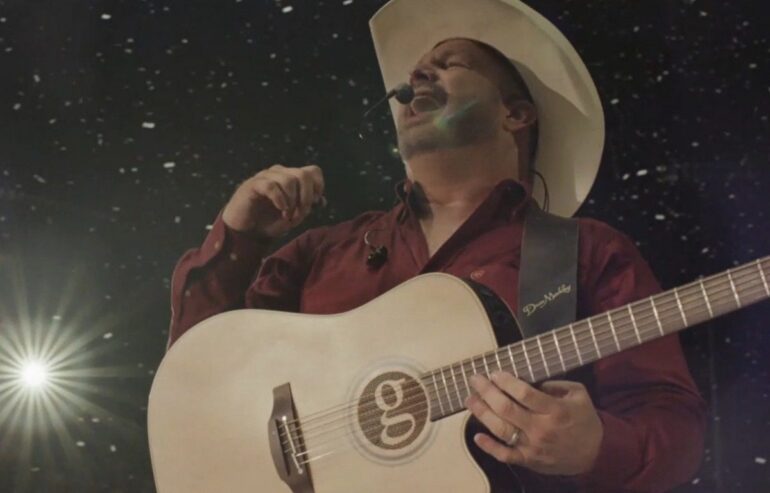
Well Garth Brooks may have unintentionally given us some insight into the cause of the problems artists are facing right now – and a potential solution – when he announced his Blame It All On My Roots arena tour earlier this year.
Of course Garth isn’t like most artists: He’s a massive global superstar, one of the biggest country artists of all time, and he can basically write his own rules for his tour. So rather than doing a traditional announcement for the tour, Garth has been unveiling the tour stops one city at a time, starting with Indianapolis and later announcing stops in Denver, Chicago and Washington, DC.
It’s a strategy that’s worked well for the “Friends In Low Places” singer. After initially announcing two nights in Indianapolis, he quickly added two more shows after the Ticketmaster queue reached over 400,000 when tickets went on sale. And it’s been the same story in every city that’s been announced so far.
He’s also doing his best to combat scalpers, by making all tickets the same price so where you end up sitting is basically the luck of the draw and not dependent on how much you’re willing to pay. (Though it hasn’t really helped much when it comes to resellers making big bucks off scalping tickets).
There’s another reason for the large demand for his tour though: Garth hasn’t been on tour since 2022, when he wrapped up his massive stadium tour. That tour kicked off way back in 2018 at Notre Dame, and took Garth to stadiums all over the country before wrapping up in Ireland four years after the tour was first launched.
Since then, Garth has stayed off the road, except for his residency shows in Las Vegas that were wildly different than his full-production tour stops. And that time off the road just might be the key to the massive demand that Garth is seeing on his current tour.
Now, to be clear, I have no doubt that Garth would be able to sell out arena shows even if it hadn’t been four years since his last tour. But would he be able to sell out four nights in every city if it hadn’t been over 5 years since he’d played a show in that city? The last time Garth was in Indiana was a show at Notre Dame in 2022, and it’s been even longer since he’s been in Denver and Chicago: He played at the home of the Denver Broncos in 2019, but he hasn’t been to Chicago since a massive 11-show run on his last arena tour in 2014.
They say absence makes the heart grow fonder. And when you have to wait more than a decade to see an artist come back to your city, it stands to reason that you’re more willing to shell out for a ticket.
We all know the impact streaming has had on how artists make money. While artists used to be able to depend on record sales for the bulk of their income, streaming came and flipped the entire system on its head: Artists now make most of their money from touring and merch sales, while streaming has all but eliminated record sales as a major source of income and pays only fractions of a penny per stream.
The result is artists are being forced to tour on a regular basis, meaning there are more chances to see your favorite artists than ever before. Is this oversaturation causing people to skip going to a concert because they know they’ll have another chance in the not-so-distant future?
Now, I’m not saying that that’s the ONLY reason for the “blue dot fever.” But when you know that you’re going to be dropping at least $100 per person once you pay for parking, food, drinks and a “cheap” concert ticket, I know I’m more likely to skip a concert knowing that I’ll have another chance to see them soon. With artists like Garth though, that’s not the case: It might be another decade before he’s back in your city, so the opportunity to see him is much more rare.
Take, for example, Post Malone’s recently-cancelled tour dates. He previously embarked on his Big A** Stadium Tour last year, before announcing Part 2 in 2026 – featuring many of the same stadiums he had played only the year before. In the time between tours he hadn’t released any new music, and though the first tour was a massive success, was the demand really there to see him twice in two years? Apparently not…but it might have been if he had waited a couple of years before returning.
Contrast that with Morgan Wallen and Luke Combs, who have no problem selling out their stadium tours. Luke took 2025 off from touring, performing only a handful of special appearances and festivals, after wrapping up his 2024 stadium tour. And when he announced his 2026 tour, it featured an entirely different set of stadiums from his previous tour, meaning he was returning to markets that he hadn’t played in nearly half a decade. And it was much the same story for Morgan Wallen, who dramatically scaled back his touring schedule the past couple years and plays less than a dozen shows per year, hitting new stadiums on each run of shows.
Unfortunately, the ability to create that scarcity is one mosts artists can’t afford. With artists dependant on touring revenue, there are only so many venues they’re able to play, so artists are forced to play many of the same cities in consecutive years – especially if they already have a track record of being able to sell tickets in a city or venue.
The result, though, seems to be that fans aren’t clamoring to buy tickets like they would be if the opportunity to see their favorite artist were more rare.
See the dilemma here? Most artists don’t have the luxury of taking a year or two (or in Garth’s case, four) between tours, yet this oversaturation appears to be softening demand.
Of course we’re also about 5 years from the post-COVID boom in demand for live entertainment. Back in 2021, fans were hungry for concerts and willing to pay to see their favorite artists, but now they’ve likely had multiple opportunities in just a few years – and demand is back to normal, or even weakening.
It’s not an easy problem to solve, and artists like Garth have the luxury of being able to take time off between tours to allow that demand to build back up. Smaller artists, though, rely on touring revenue to survive – and right now, the touring revenue just isn’t what it used to be.
Unfortunately, there’s not an easy solution for “blue dot fever.” At least not one most artists can afford.