

It’s about time.
Ever since NASCAR implemented stage racing in 2017, it’s been a deeply polarizing subject for fans of the sport. Of course some enjoy the natural break in the action, giving them a chance to go to the bathroom or the concession stand at the track, and helping to break up a race that may not have as much action for an opportunity to build some excitement. And of course NASCAR and networks love it because it’s a built-in commercial break which allows them to sell advertisements without having to cut away from the action on the track.
But critics of stage racing (and there are a lot of them) feel like it’s a gimmick that takes away from the natural flow and strategy of the race and inserts manufactured drama at the expense of competition.
Lately though, another criticism has been front and center: The stage breaks take way too long.
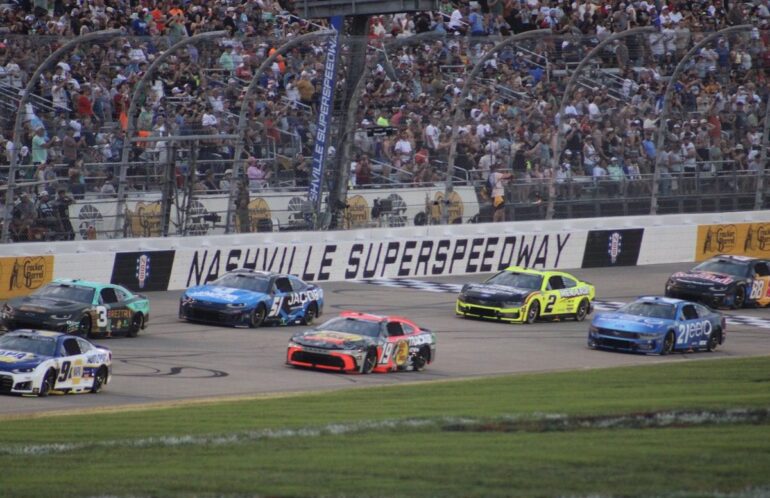
The way stage breaks work in NASCAR is pretty simple: Each race is split into three stages. Pit road closes two laps before the stage ends, then at the end of each stage, a caution is thrown (it’s actually a green and white checkered flag) and points are awarded to the top 10 finishers. Cars then have the opportunity to come down pit road, then they line up and get back to racing.
Naturally, this takes away some laps of actual racing spent running around under caution. And it’s even worse when a caution comes out just before a stage break: If NASCAR isn’t able to get the race restarted before the stage ends, they’ve traditionally ran under caution until the end of the stage, THEN thrown the green and white checkered flag before opening pit road.
This results in extended caution periods that end up taking way too long and eating even more into the laps of actual racing that fans get to witness, and it’s a problem that was especially bad during the recent Brickyard 400 at Indianapolis Motor Speedway.
During that race, a caution flew on lap 46 for an incident involving Kyle Larson. The race went back to green on lap 49, but lap 50 was the end of the first stage – meaning that NASCAR ended up spending over 20 minutes to run one single green flag lap.
And it was even worse at the end of stage 2, when a caution came out on lap 97, just three laps before the end of the stage. Because there wasn’t enough time to get back to green before the end of the stage, the cars ran around under caution for 3 laps before NASCAR finally threw the green and white checkered flag, and only then could cars come down pit road on the next lap.
The result of that caution was yet another 20+ minutes of riding around behind the pace car, which left both drivers and fans frustrated that there wasn’t anything NASCAR was able to do to speed it up.
Well it seems that NASCAR finally heard the criticism, because today the sport announced a change in procedure for situations like we saw at the Brickyard to hopefully move things along and prevent these extended caution periods at the end of stages.
Starting this weekend at Iowa Speedway, NASCAR announced that if a caution flag flies within 10 laps of the end of a stage, that caution will count as the end of the stage – eliminating the “back to back” cautions that we saw at the Brickyard.
According to the new rule:
“The leader will return to the start finish line to receive the green and checkered flag along with the yellow. The caution process that follows will serve as the stage break.”
Now, obviously this could throw a wrench into the strategy for a lot of teams. With NASCAR analytics becoming so advanced, teams often plan down to the lap when it comes to deciding how much fuel to take and when to pit. Now with the possibility of a stage break coming any time within a 10-lap window, teams might be more willing to risk trying to stretch their fuel in hopes of winning a stage thanks to a late caution.
The rule could also potentially extend the second or third stage of a race: No matter when the race gets back to green, the end of the next stage (or the end of the race) will remain on the same lap. So teams may have a strategy to run a 100-lap stage, but now they have to plan for the possibility of a 108-lap stage too.
It’ll be interesting to see how it all plays out, but I think more strategy and more racing is only a good thing for NASCAR. Hopefully we’ll see fewer long cautions, and more actual green flag racing.