

Saying what everybody already knows but nobody seems to want to talk about.
There’s been a lot of talk lately about “blue dot fever,” or artists cancelling concerts due to low ticket sales. I won’t go through all the examples, but it seems like across the board we’ve seen a lot of cancellations and artists struggling to sell tickets, whether that’s in an arena or a 500-cap club.
We’ve been talking here at Whiskey Riff for a while about artists who are signing a record deal and going out on tour after blowing up on TikTok, when they only have one or two viral songs – and in some cases they’ve never even played a live show before.
Eric Church even mentioned a while back that he was planning on taking a new artist on the road with him until he realized they had NEVER played a live show:
“And this person has a presence on social media, whatever, and I said, ‘Hey, you know, we’d love to have you.’ They don’t have a band yet, they’ve not toured yet, that’s all just what they do on their channel. They’ve not played yet. And it’s like, you’ve not taken anything on the road… and that’s the problem.”
As Church pointed out, those are the things that teach artists how to perform and how to actually be an artist:
“Because you learn so much from being in those situations, and what I found in my career, you’re gonna get in big moments. And if you don’t feel like you deserve the big moment, you might not meet the moment. And those early days allow you to know when you get to that moment, you’ve put in the work to earn it.”
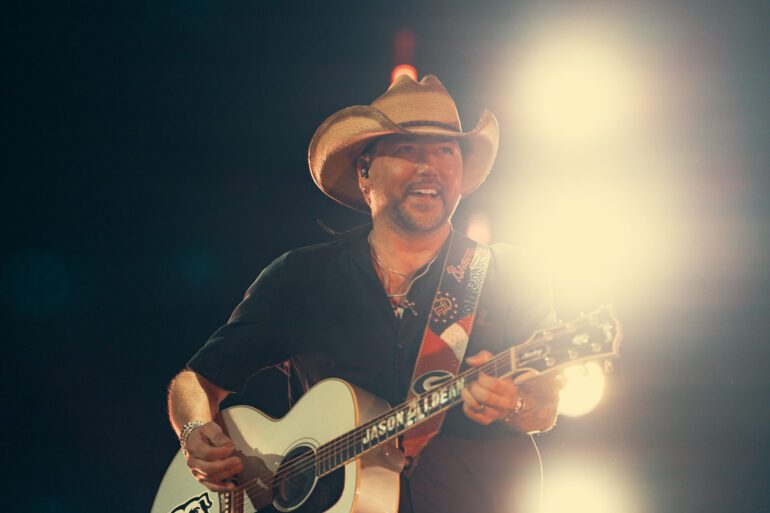
And Jason Aldean is speaking out on it as well, making the point that artists are being rushed into being headliners before they’re truly able – or ready – to play a headlining show.
The “Dirt Road Anthem” singer discussed the issue on the Try That In A Small Town Podcast, which is hosted by the song’s co-writers and also featured his tour manager, Jake Lagrone. As Aldean recalled, he was pushed to start headlining his own shows around 2009 after the success of songs like “She’s Country,” “Big Green Tractor,” and of course “Hicktown,” but he wasn’t in a rush because he didn’t feel like he had built up enough of a catalog of hits to sustain a headlining show:
“I even put it off a little longer just to give us time to get another song out and kind of let that heat that was starting to happen, just let it bubble a little bit more. And man, when we finally did go out to do it, it was like, it didn’t take long to realize that’s what happens. …
It was an eye-opening thing for me at that time.”
Aldean argues that artists shouldn’t be afraid to slow things down and turn down opportunities to headline before they’re ready:
“It’s okay to say no sometimes and go like, ‘Man, I don’t know,’ or ‘I don’t think that’s right for me.’
Everybody wants to be a headliner but the problem is a lot of them only have one or two songs and think they can go out and carry an hour and a half or two hours of a show, and it’s like dude, you got two songs people really care about that they want to hear. What are you going to do for the other 80 minutes?”
As he points out, a lot of the time the result is artists being booked in venues that are too big for them to fill, which forces them to either play in half-empty rooms or give away tickets to make it look like the show’s more full than it really would have been. And that can be a career-ending mistake for a lot of young artists:
“It’s happened for artist, big artists, that I think had … a real chance in the business to have a career and just made the jump too early instead of taking their time opening for somebody, building their catalog a little bit, letting some songs come out, so they had enough songs to fill up a set list. So I see that all the time.”
Of course Aldean didn’t mention any names, but I can think of at least a dozen artists over the past decade who were rushed to becoming headliners and it’s hurt their career. Some are still out there, but some have disappeared entirely – even after it seemed like they could have had a promising career ahead of them.
And to be clear, I’m sure a lot of artists make these decisions for themselves, but there are also a lot who are pushed by those around them: Record labels eager to recoup their investments, managers who only tell artists what they want to hear, and social media and streaming numbers that don’t tell the full story.
It can be especially damaging to artists now because touring is such an important part of how they make their money, so one bad tour can ruin an entire career if artists aren’t careful.
I guess that’s just the era that we’re living in right now though.
You can watch the full conversation with Aldean here: