

Sounds like the NCAA is fed up.
It’s been the wild west in college sports over the past couple years, ever since the introduction of Name, Image and Likeness (NIL) as a result of a Supreme Court ruling in 2021.
Since then, the once-powerful organization has faced a series of court challenges to its authority that’s resulted in the NCAA effectively being unable to set guidelines on eligibility for the “amateur” athletes.
Let’s take a look at some of the important developments over the past few years.
Back in 2023, seven state attorneys general filed a lawsuit against the NCAA, arguing that the league’s transfer portal restrictions were illegal, because it was effectively limiting the amount of money a student athlete could earn under the new NIL guidelines. The Department of Justice eventually joined the lawsuit, and soon the NCAA announced changes that would allow unlimited transfers during an athlete’s career and no eliminate the requirement that an athlete who transfers more than once be forced to sit out a year.
Then in 2024, Vanderbilt quarterback Diego Pavia filed a lawsuit against the organization challenging the rule that counted “JUCO years,” or time spent playing in junior college, towards an athlete’s eligibility. A court eventually granted Pavia (and other JUCO athletes) an extra year of eligibility, but the ruling only led to a flood of athletes seeking additional eligibility for other reasons such as medical redshirts and COVID waivers.
The NCAA attempted to adapt by implementing a so-called “five for five” eligibility rule under which an athlete would have five seasons of competition over a five year period. But this rule isn’t set to go into effect until the 2027 season, and many athletes who have exhausted their eligibility under the current rules filed lawsuits demanding that they get a fifth year of eligibility too.
Well this afternoon, a pair of rulings granted them just that. In Tennessee, a Nashville judge granted a temporary injunction to 19 basketball players seeking a fifth season. But in Colorado, a judge went even further and granted an injunction that gives ALL players who began their college career during the 2022-2023 season and have exhausted their eligibility an extra year to play.
The Colorado order requires the NCAA to open the transfer portal for these athletes next week, meaning there are hundreds of athletes suddenly eligible to sign with a team just weeks before the fall seasons start. Obviously this is going to throw a wrench into college athletics once again, something that NCAA President Charlie Baker pointed out in a scathing statement that called the athletes seeking additional eligibility “failed professions” and called on Congress to take action once and for all:
“Without targeted intervention from Congress, college sports cannot set nationwide rules everyone can play by and without Congress, failed professionals will continue to use college sports as a fallback option — robbing the next class of young athletes of college scholarships. It is long past time leaders across college sports call for the immediate passage of the bipartisan Protect College Sports Act — a bill supported by student-athlete leaders, Democrats, Republicans and NCAA schools from all three divisions. Today’s rulings and the chaos they bring to college sports are exactly why it’s time to pass this bill.”
Yeah, sounds like they’re fed up.
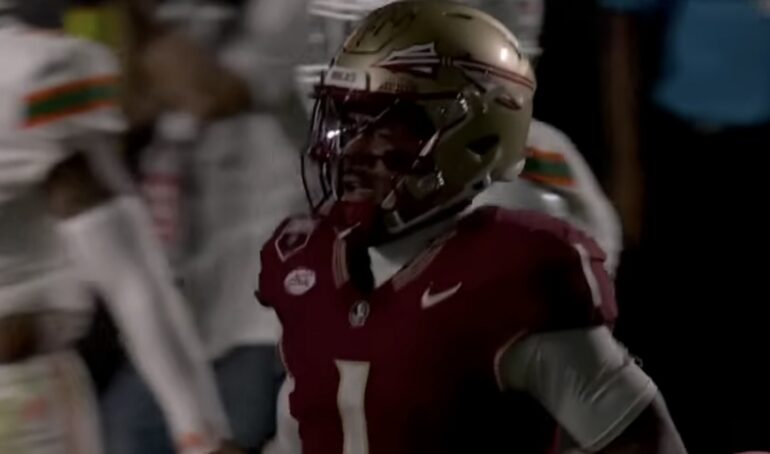
Of course all of these athletes who were just granted an extra year of eligibility were able to go pro if they were able to, so these are athletes who either chose not to pursue a professional career or weren’t able to make a professional team. Already, Florida State quarterback Tommy Castellanos has reportedly expressed his interest in returning to college after he didn’t get selected in the 2026 NFL Draft:
(You can read the responses from Florida State fans to see how they feel about that).
And we’ve even seen instances of players who were drafted into the NBA choosing to return to college instead, because they can make more money there under the current NIL framework.
Like I said, it’s a total mess for the NCAA, and one that at this point it looks like only Congress can fix through legislation. At least it seems like that’s what the NCAA is hoping for at this point.