

Should NASCAR shorten their races?
That’s been the topic of discussion this week throughout the garage, after comments made by 6-time IndyCar Series champion Scott Dixon last weekend.
Dixon stirred controversy during last weekend’s IndyCar race at Nashville when he was asked whether he thought the series should have longer races, and he answered by implying that NASCAR races are too long:
“I don’t know, I find it really hard to watch a Cup race these days. It allows for a nap, so maybe that’s good, I don’t know.”
Now, maybe it’s because he’s never been able to watch IndyCar races since he’s…you know, racing in them, but I’ve personally never once turned on an IndyCar race and been happy with my decision. The races are pretty boring, and especially on road courses, there’s not a lot of passing so it’s hard to really get into them. But that’s just my opinion.
Well obviously Dixon’s comments didn’t sit well with many in the NASCAR community. Danielle Trotta, host on NASCAR Sirius XM and a member of the broadcast crew for NASCAR on Amazon Prime and TNT, took issue with the remarks and responded by taking a shot at IndyCar:
But some in the NASCAR Cup Series garage apparently agree with Dixon and believe that races are too long.
Two-time Cup Series champion Kyle Larson spoke out and said he believed that the races should be less than three hours:
But Parker Kligerman, a driver in the NASCAR Truck Series and member of the broadcast crew for the O’Reilly Auto Parts Series races on The CW, disagreed, arguing that the race length should be part of the challenge for drivers:
Others argued that the race distance isn’t the problem, but how long cautions last in the Cup Series:
Now, I agree with that part: If NASCAR wants to speed up races, they should start by reducing the amount of time spent riding around under caution. Especially now that races have two guaranteed caution flags every week thanks to stage cautions, NASCAR needs to work on shortening the time it takes to get back to green flag racing.
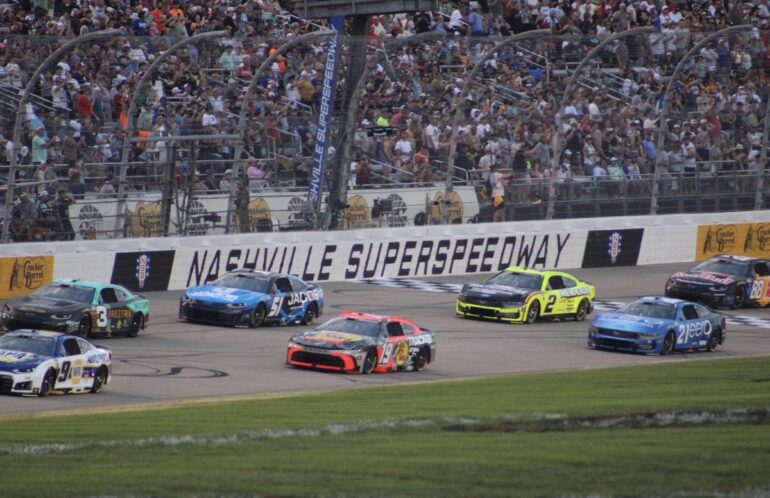
But even with the extended caution flags we’ve seen this year, the average time of a NASCAR Cup Series race this year is still only 3 hours and 15 minutes, which is almost exactly the same as last year. This is only 7 minutes longer than the average time of 3 hours and 8 minutes in 2016, the year before NASCAR implemented stage cautions, and 9 minutes SHORTER than races in 2005, during what’s widely considered the height of NASCAR’s popularity when Cup Series races lasted an average of 3 hours and 24 minutes.
There’s also something to be said about NASCAR races being long enough to be challenging for a driver. If the races are shortened to where there’s no strategy and no physical or mental toll on the drivers, it’s no doubt going to dilute the quality of the races – and the quality of the winners. The best race car drivers are the ones who can stay focused both mentally and physically for a long, grueling race and come out on top at the end, and NASCAR often boasts about having the best drivers in the world: Why should the races be made easier by removing some of the challenge for them?
Then there are the fans who go to the track. NASCAR has already shortened the time that cars are on the track every weekend by reducing practice sessions (though they’ve recently made some changes to increase practice time for most races), so why would you take even more racing away from fans who spend a ton of time and money going to a NASCAR race in person? If an extra 100 miles adds another 45 minutes to a race and gives fans the opportunity to get more of their money’s worth, isn’t that a good thing when it comes to enticing people to attend a race in person?
I think it’s clear where I stand: No, NASCAR races don’t need to be shortened.
Now, have there been times where I’ve caught a quick nap in the middle of a race? Sure. (But to be fair there have also been times where I’ve caught a quick nap in the middle of an hourlong true crime documentary). But to reduce the skill that it takes to win a race by shortening them – and to take away racing from fans at the track – seems completely counterproductive to NASCAR’s goal of improving the sport, especially when the stats show the NASCAR races aren’t any longer than they’ve historically been.
If Scott Dixon wants to take a nap during the race, let him.