

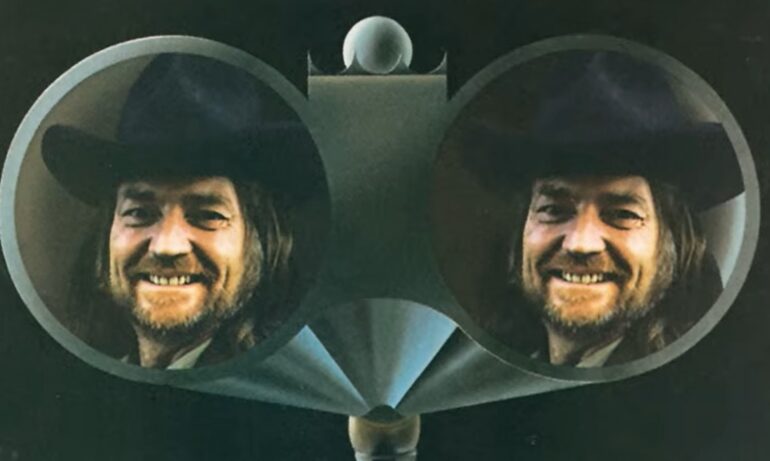
In a world where politics are hyper divisive and there is no room for middle ground or nuance, even your average conservative (like me) is still a fan of Willie Nelson… he’s the definition of a transcendent artist. When you picture Willie Nelson today you probably see the iconic braids, the battered acoustic guitar named Trigger, and a cloud of smoke that could hotbox a football stadium. He’s the undisputed ambassador of peace, love, and top-tier cannabis. From his tranquil, soft-spoken personality to a catalog of legendary songs that will forever be etched into the country music history books… a living legend in every sense of the phrase.
But beneath that Zen exterior beats the heart of a legitimate Texas outlaw. And I know Waylon said the “most outlaw thing he ever did was double park on Music Row,” but if you ever needed proof that Willie isn’t someone to mess with, you don’t need to look any further than the origin story of his most badass moniker: “Shotgun Willie.”
For years, fans have sung along to the 1973 title track without knowing exactly how he earned the name. Fortunately, the full rundown is out there, and it is easily one of the craziest true stories in the history of the genre. According to Texas Hill Country, the chaos started when Willie found out his daughter, Lana, was being abused by her husband, Steve. Now, it doesn’t matter how much peace and love you preach—you do not put your hands on a man’s daughter.
Willie immediately saw red, ran out to his truck, kicked it into high gear, and hauled a** over to where Steve and Lana lived. He didn’t mince words, and he didn’t call the authorities. According to the legend himself, Willie simply walked in and “slapped Steve around,” making it crystal clear that if Steve ever laid a finger on Lana again, there would be hell to pay.
“I ran for my truck and drove to the place where Steve and Lana lived and slapped Steve around.”
Thinking the message was delivered, Willie drove back to his home in Ridgetop, Tennessee. (For context, this is the exact same infamous Ridgetop property that would later catch fire, prompting Willie to run into the flames just to save his guitar and a pound of stash). But this situation was far from over.
A little while later, Steve pulled into Willie’s driveway and started opening fire on the property with a .22 rifle. Willie was standing in the doorway of his barn, and one of Steve’s bullets whizzed right past his head, missing him by mere inches.
Big mistake.
Willie didn’t run for cover. Instead, he grabbed an M-1 military rifle and started returning fire on his crazed son-in-law. Outgunned and terrified, Steve stomped on the gas and fled the scene. But Willie knew the psycho would be back. so anticipating a round two, Willie set an ambush. He later recalled his exact thought process:
“Thinking Steve would come to Ridgetop to pick me off about dusk, I hid in the truck so he couldn’t tell if I was home… I had my M-1 and a shotgun.”
Sure enough, as the sun went down, Steve rolled back onto the property. Willie immediately charged out of the garage, fully armed, and blasted one of the tires right off Steve’s car.
“That’s when I shot his car and shot out his tire.”
Steve actually had the nerve to call the police, but when the cops showed up to investigate the bullet-riddled vehicle, Willie decided to play dumb. Instead of explaining the massive family shootout, Willie just looked at the officers and casually suggested that Steve “must have run over a bullet.”
The cops didn’t press it, Steve got the message, and the legend of Shotgun Willie was officially born.
Willie took that raw, outlaw energy and poured it straight into his music. He penned the song “Shotgun Willie,” which became the title track of his landmark 1973 album. After buying out his contract with his old record label, Willie moved over to Atlantic Records and finally started doing things his own way. That record marked his departure from the squeaky-clean Nashville machine, kicking off the gritty, authentic Outlaw Country movement that changed the trajectory of his career, and country music, forever.
Cue it up: