



The NTSB has released their first report on the fatal plane crash last month that took the life of retired NASCAR driver Greg Biffle and 7 others, giving us our first real insight into what went wrong during the plane’s final moments.
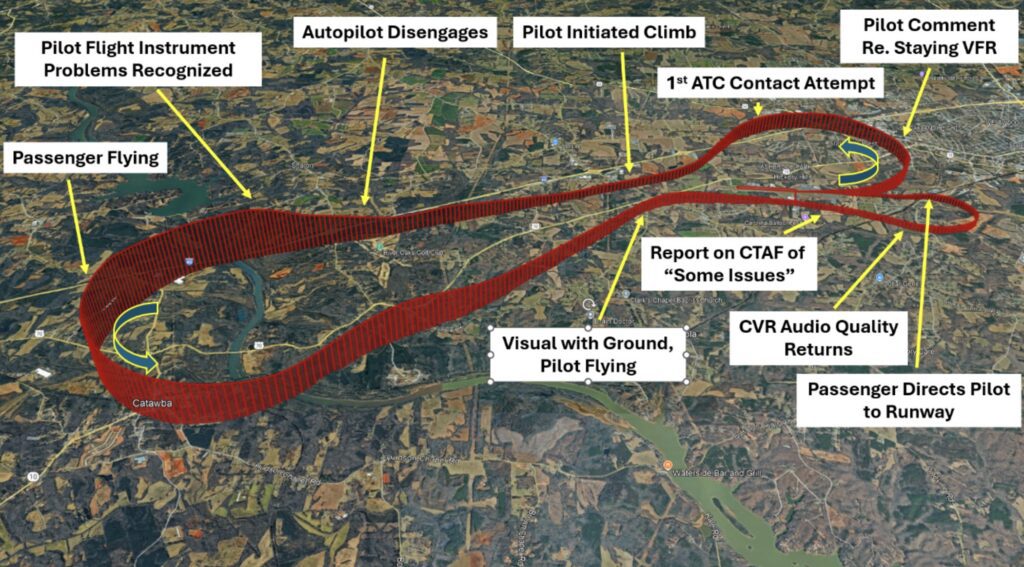
The private Cessna Citation II with tail number N257BW crashed on December 18, 2025 just minutes after taking off from the airport. According to flight tracking data, the plane took off at around 10:06 AM eastern time from runway 10, but just minutes later made a turn back towards the airport in an apparent attempt to land on runway 28.
In addition to Biffle, the crash took the lives of his wife, Cristina Grossu; 5-year old son Ryder; his 14-year old daughter from a previous marriage, Emma; Dennis Dutton and his son, Jack; and Craig Wadsworth.
After the crash, Biffle’s mother-in-law Cathy Grossu revealed that she received a text from her daughter shortly after takeoff:
“She said something like ‘We’re in trouble, emergency landing.’ And I texted back, ‘What’s wrong with the plane?'”
The NTSB is still working to determine exactly what went wrong, but today they released their preliminary report on their investigation, revealing new details on the plane’s final moments.
While not naming him in the report, the NTSB confirms that the pilot of the aircraft was airline transport rated, which would align with what we know about Dennis Dutton. His son Jack, who held a private pilot certificate with a single engine rating, was seated in the right seat of the cockpit, while Biffle, who held a private pilot certificate and was rated for multi-engine aircraft, was seated “near the cockpit in the cabin area.”
While taxiing on the runway, the cockpit voice recorder captured conversation between the three about a thrust reverser light that wasn’t working, but it seems they all agreed that the thrust reverser (which slows down a plane when landing) was operating properly.
During takeoff, Biffle commented that the left engine was producing more power than the right, and that it may be an issue with a gauge, but Dutton continued with the takeoff. While climbing, Biffle also pointed out a difference in temperatures between the left and right engines.
Soon thereafter, Dennis Dutton remarked that his altitude indicator wasn’t functioning properly, and that other gauges on the left side of the cockpit may not be working either. He then transferred control of the plane to his son, who was seated beside him but not rated to fly this particular aircraft.
At some point, the NTSB determined that Dennis took back control of the plane, and the pilots began configuring the plane for landing. Around this time, Jack Dutton made an announcement on the radio that the plane was “having some issues.”
It seems they continued to try to troubleshoot, with Biffle suggesting a problem with the alternator, though the NTSB notes that the model of plane isn’t equipped with an alternator. The plane continued to turn back towards the airport, with both Jack and Dennis Dutton confirming that they could see the runway.
From there, the plane continued to lose altitude and speed until audio and GPS data ended at 10:15 AM, less than 10 minutes after takeoff.
The report goes on to detail damage to both engines, though it’s unclear whether any of the damage happened before the crash.
Overall, the report doesn’t reach any conclusion on the cause of the accident, which will be included in their final report issued 12-18 months after the accident. But it does provide some important information about the plane’s final moments and the mechanical issues they may have been facing as they tried to return to the airport.