

Is this crossing the line, or an acceptable use of AI in country music?
Of course where the “line” is for artificial intelligence is still very much a hot topic in country music right now, given the rapid advancements in technology that have allowed AI to create music that’s nearly indistinguishable from the real thing.
Whether we like it or not, the reality is that AI is here to stay, and it’s largely up to fans and the industry itself to decide what’s acceptable and what’s not. But the use of AI obviously raises a lot of issues: Do artists have to disclose that they’re using AI in their music? How do we compensate artists when their actual human-generated music is used to train AI models? How can fans be assured that the music they’re listening to isn’t AI? Are songs being written with AI, and if so, who should get credit for that?
Unfortunately the technology is advancing much faster than laws and policies can keep up with. A couple of years ago Tennessee took an important step by passing legislation to protect artists’ image and voice from unauthorized “clones,” prohibiting others from using an artist’s voice and likeness to create music in their name. But other than that, the industry as a whole hasn’t really come to a consensus on what is acceptable and what’s not when it comes to using AI in music.
Of course it seems that most artists and songwriters are strongly against the use of ANY AI when it comes to the creative process. In fact, Keith Urban recently made that perfectly clear during his recent performance at Country Thunder Wisconsin:
@whiskeyriff @Keith Urban @Country Thunder #whiskeyriff
But exactly how – and how much – AI can be used in the creative process is still something that’s very much being worked out in Nashville right now. And one country artist recently revealed one way in which the technology is being used.
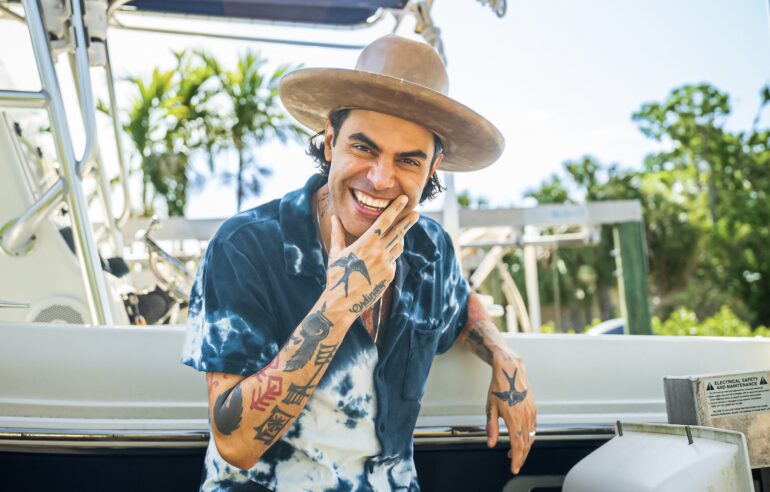
Niko Moon recently sat down for an interview on the Bobbycast podcast with Bobby Bones, where he said that songwriters are using AI, not to write the songs, but to create the demo tapes that they pitch to artists:
“I’ve been hearing that, here in town, with songs that are being pitched to artists, one of the guys in the room will sing the demo and then they’ll transfer it over into Jelly Roll or Morgan’s voice or something, so that when they hear that song pitched to them they’re actually hearing themselves.”
Now, one benefit to this is that it saves the songwriters money when it comes to creating demos: If they’re able to use AI to put together a demo track and not have to pay someone to record it, they can presumably pitch even more songs to artists and increase their chances of getting a cut. But then that also has an effect on people who make their living singing demo tracks…
And as Niko and Bobby point out, it also puts the burden on the artist to be ethical and not decide to simply put out the demo that’s already been created with their voice.
There’s also the slippery slope argument: Songwriters use AI to pitch a demo to an artist using their voice, but where does it end? What if that artist passes, but later on down the road a label who has the rights to the demo decides that they want to put it out anyway? What if it gets leaked and everybody thinks it’s some kind of “lost track” from the artist, even though they passed on the song?
So is this ok? Well, it doesn’t really matter what we think, but fans in the comments seemed to be divided on whether this was an acceptable use of AI – even if it’s a demo tape that they’re (theoretically) never going to hear:
“If the song was written without AI and it’s strictly being used for the artist to imagine them singing it…. I feel like it helps the writers possibly land more songs.”
“This is actually a completely acceptable way to use AI in music. It’s only in the reference track and not even used creatively.”
“Let’s just agree to shove AI in a drawer and forget about it”
“If you write a song organically and record a demo and you wanna pitch it to a known artist, I can see how that might be kind of cool just so they can sort of hear what it would sound like if they tracked it.”
“That will be the death of music.”
This is obviously just one of the issues that the industry is going to have to grapple with (and apparently is already dealing with) when it comes to the creep of AI into everything we do. For now it seems like at least some artists and songwriters are ok with it – but is it just the first step into the normalization of AI in music?
We’ll have to wait and see I guess.