


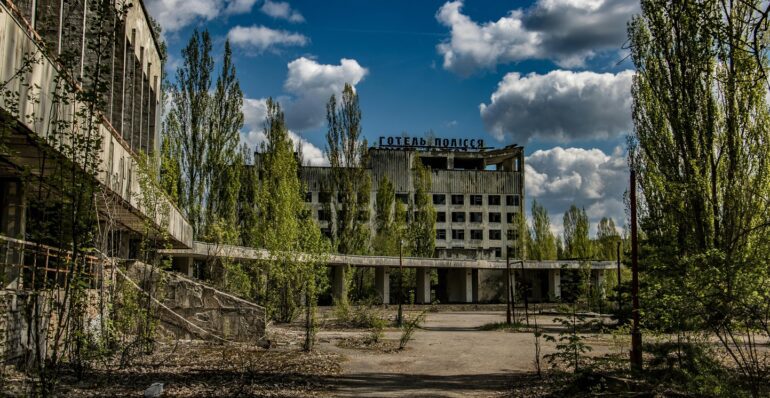
For some reason, the site of the worst nuclear meltdown in the history of the world is actually drawing in wildlife.
Mother Nature and the animals that live on this planet are truly fascinating. It really is “adapt and overcome” (survival of the fittest, they say) out in the wild, and scientists have been blown away to discover that large mammals are actually moving into the “Chernobyl Exclusion Zone (CEZ),” rather than avoiding it.
And they’re thriving.
Of course, that wasteland is the result of the Chernobyl disaster, which took place in April of 1986 and is considered to be the worst nuclear accident in the history of mankind. The nuclear power plant located in northern Ukraine malfunctioned, causing an explosion that resulted in the release of cancer-causing radiation and debris into the atmosphere.
Radiation levels there are still six times the exposure amount that is safe for humans, and it’s believed that it could take 20,000 years for the immediate area to be habitable. But with that being said, wildlife that has either moved into the area or remained in the Chernobyl even after the disaster are surprisingly doing quite well.
Horses, elk, deer, lynx, bears, moose and dogs (that are likely descendants from those that were left behind during the evacuation) and many other animals have adapted to withstand the radiation levels in the area. That has obviously interested researchers, and one ecologist by the name of Svitlana Kudrenko recently concluded in his study that animals are actually moving into the CEZ.
Why? Well, despite the high levels of radiation, the area is attractive to wildlife because… there’s no humans in the area. Everywhere in and around where the city of Chernobyl once stood is off limits to humans, and that’s great news for animals – especially larger mammals.
Hunting and traffic incidents are the two most significant human disturbances that bigger animals face. With no one allowed in the Chernobyl area, the animals there are basically and ironically living in a utopia. It’s a wasteland for humans, but a paradise for the wildlife.
Tim Mousseau, a professor of biological sciences at the University of South Carolina, told ABC News that there’s no doubt the more sizable animals in the CEZ are benefiting from living in the area:
“It is very clear that large protected regions like the Chernobyl Exclusion Zone provide the requirements for mammals like moose, deer, wolves, and wild horses to escape from hunting pressures and other human disturbances.”
Pretty crazy how nature can thrive in worst of places, eh?
Interestingly enough, another study from 2024 revealed that the wolves living in the CEZ could play a role in finding a cure for cancer. Biologists and scientists went into the area and trapped wolves, then took blood samples and equipped them with GPS collars with radiation detection technology that gave them real time measurements.
They then studied all of the genetics and information they gathered and found that not only were the wolves living in areas that should be delivering fatal doses of daily radiation, but the wolves were also virtually unaffected by the radiation. Further examination revealed that genes linked to cancer that the wolves possessed had mutated, which led researchers to believe that they’ve evolved to basically be a radiation protectant.
That information and research could pave a way for cancer experts to hone in on human mutations that could potentially reduce cancer risk, and possibly one day be utilized to cure cancer in humans. If that does play out on day, it could the world’s best examples of making the best out of the worst.
And at the end of the day, even though Chernobyl will likely be avoided by humans for thousands of years… it’s giving wild animals a safe haven to live in.